
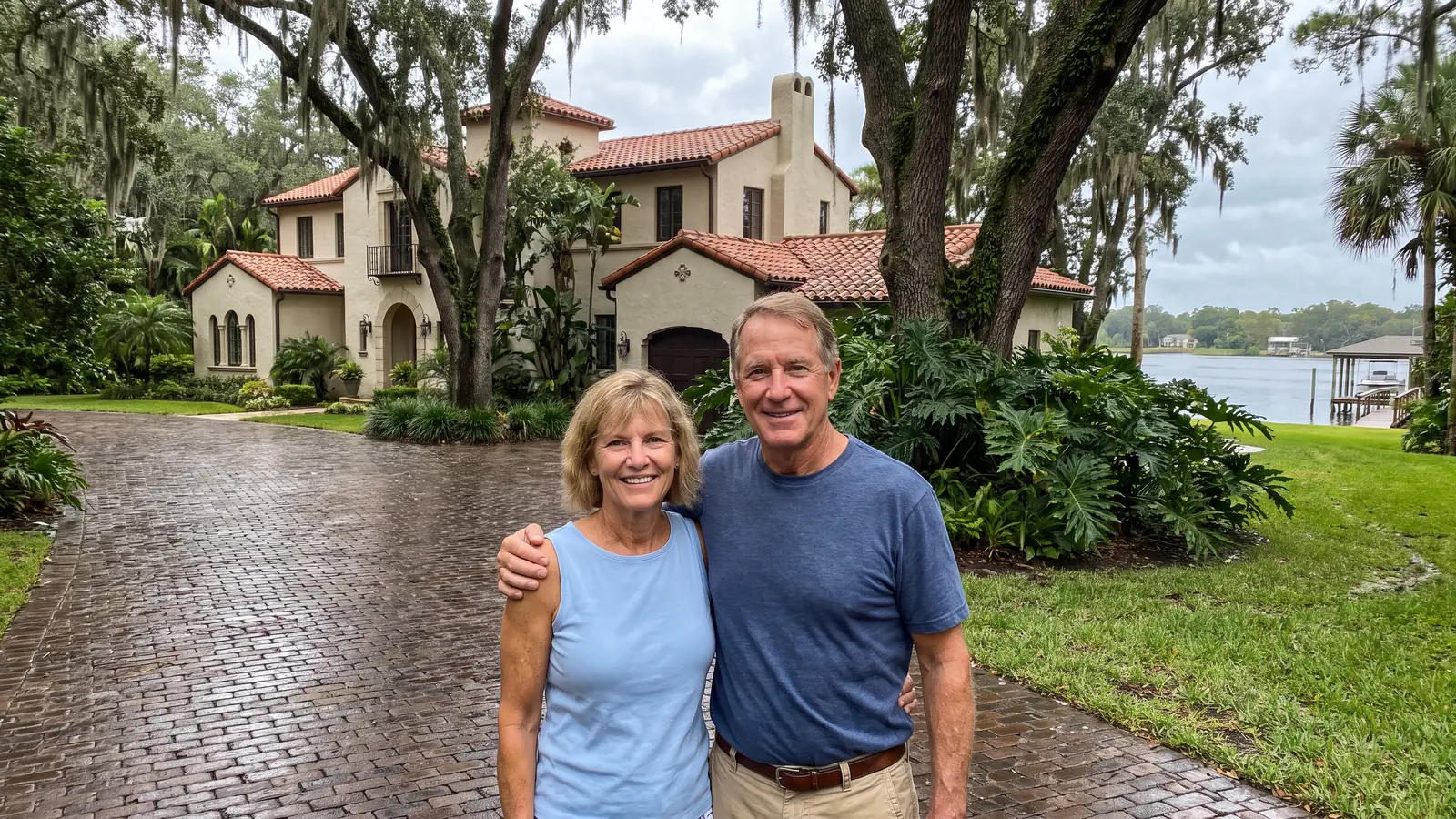
Sunken, stained pavers leveled, cleaned and sealed
Paver Restoration and Resealing in Ortega, FL
Call (904) 567-0456 for a free estimate to repair, clean and reseal worn pavers around Ortega.
- Brings out deeper paver color
- Fresh joint sand helps lock pavers in place
- Gives weeds less room to grow
- Makes the surface easier to keep clean
- Free estimate, no obligation
Request a Free Estimate
Free, no obligation.
Can pavers in Ortega, FL be restored instead of replaced?
Often, yes, and a local contractor will tell you which parts of your pavers can be saved within 1 business day of your request, usually much sooner. Restoration reaches homes across Ortega, and the visit and estimate are free. Begin with a call to (904) 567-0456.
Think of the driveway apron with a dip where the base washed out, joints open to the dirt and a milky film where the old sealer gave up. Fix the low spots, clean the surface, refill the joints and put on a fresh coat, and most of that field looks new without a dump truck. To have a contractor see it, request your free estimate.
What is paver restoration, and how is it different from a reseal?
A reseal covers clean, sound pavers with new sealer. Restoration is the longer job for pavers that are sunken, spread apart, stained or wearing a failed coat, and it has an order. A Northeast Florida washing company puts it as repair first, then clean, then seal, and says a coat over unrepaired pavers locks the problem in. Ask which of the two your pavers need when you phone (904) 567-0456.
Does paver restoration reach my street near Ortega?
Restoration crews work across the peninsula and out to every place linked below in Duval County and the counties around it. Choose yours for its local page, or phone (904) 567-0456 to check a street that is not listed.
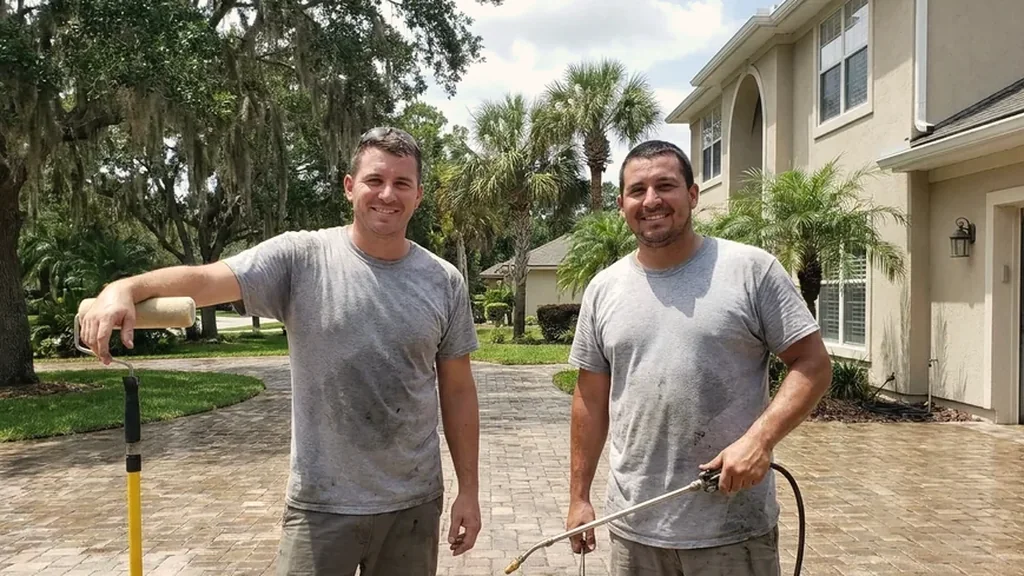
What causes pavers around Ortega to sink, lift or spread?
Water is the usual culprit. A Northeast Florida paver company says water running under the surface washes out the base, and that heavy rain keeps removing base and joint sand, so a small dip grows each rainy season. Another local company adds poor compaction at install and failed edge restraints to the list. When you request your free estimate, show the contractor where water collects.
Oaks add to it. The same paver company says tree roots grow under pavers, and that oak roots can spread 10 to 20 feet from the tree. Ortega's older streets have plenty of mature canopy, so a lifted corner near a trunk is a common sight on this peninsula. A walk with the contractor will show whether a root has to come out. Describe yours when you phone (904) 567-0456.
What is the restoration process, from first look to the last coat?
Most jobs run in this order, and repair always comes ahead of the sealer. To hold a date, phone (904) 567-0456.
1. Walk and assess
The contractor finds the cause of each low spot, marks cracked pavers and notes failed sealer and empty joints.
2. Lift and rebuild
Affected pavers come up without chipping their neighbors, any roots in the way are removed, and the base is regraded and compacted.
3. Reset the pavers
The pavers go back level with the surface around them, and a matching stone replaces any that cracked, if one can be sourced.
4. Strip and wash
Failed sealer is stripped, never coated over, and the field is washed with a method that fits the paver material.
5. Sand the joints
New joint sand fills every gap once the surface is dry, and the area is compacted again.
6. Reseal
A fresh coat goes onto clean, dry pavers, and the contractor gives the waiting times for feet and cars.
How do I know the old sealer has failed?
Look for white or hazy patches, peeling or flaking, and water that soaks in and darkens the surface instead of beading. A Northeast Florida washing company says white, hazy or flaking sealer has to be stripped before a new coat, since fresh sealer will not bond over it. Trapped moisture beneath a film causes much of that cloudiness. A Northeast Florida paver company adds that failed or cloudy sealer may need stripping instead of washing. Send a photo or call (904) 567-0456 for a quick read.
Will restoration fix the white film on my newer pavers?
Only if the film is something that has to be fixed. A white haze on newer concrete pavers is often efflorescence, which Cambridge Pavers calls completely natural. It stops when the supply of calcium hydroxide runs out, and rain can wash some of it away over time. Cleaning it takes a cleaner made for pavers, tested on a small patch first. A calendar fix is rare, so describe the age of the pavers when you request your free estimate.
How long does a restoration take?
Most single repair jobs finish in one day, says a Northeast Florida paver company, and larger projects or jobs with heavy base work may take two. A Northeast Florida washing company calls empty joints or failed sealer a two-day restoration rather than a same-day spray. Drying time in damp shade can stretch the schedule, and so can a stormy week. Ask for the likely number of days when you phone (904) 567-0456.
What does paver restoration cost around Ortega?
Nobody posts one price for restoration, because the repairs vary from yard to yard. The table below builds it from the published pieces: $1.75 to $3.25 per square foot to clean, sand and seal, with stripping running 20 to 30 percent above a standard seal at one Northeast Florida washing company. Base repair, root removal and replacement pavers are quoted after a visit. To get a number for your yard, request your free estimate.
The same company's calculator lists add-ons such as $250 to remove a solvent-based sealer and $100 for efflorescence treatment. A second Northeast Florida firm says strip-and-reseal sits higher when the old coat has failed. Compare a bid in hand by phoning (904) 567-0456.
Want a different service? See paver sealing, paver cleaning and joint sand, every place served or the Ortega home page.
| Paver area | Clean, sand and seal | With failed sealer stripped |
|---|---|---|
| 400 sq ft | $700 to $1,300 | $840 to $1,690 |
| 800 sq ft | $1,400 to $2,600 | $1,680 to $3,380 |
| 1,200 sq ft | $2,100 to $3,900 | $2,520 to $5,070 |
The second column adds the 20 to 30 percent that a Northeast Florida washing company says stripping runs above a standard seal. Lifting, rebuilding the base and replacing pavers are extra and are priced after a visit. Smaller areas often cost more per foot.
Is it cheaper to replace or to restore?
Restoring wins whenever most of the field is sound. A Northeast Florida paver company says replacement is only called for when more than 40 to 50 percent of the paver field is compromised, or when the base has failed across the whole area. Reusing your own pavers also keeps the color you already have, and matching a new paver to an old one is not always possible. Ask the contractor to show you which squares truly need to come out: request your free estimate.
Does restoring pavers affect the joints and weeds?
It should help. Landscape Ontario says checking the joints for lost sand and topping them up is routine upkeep, and that cleaning and sealing help deter ants and weeds. It also notes that joint sand is sometimes re-applied after a pressure wash. A Northeast Florida cleaning company recommends re-sanding after spring pollen and summer rain, since tight joints resist washout in afternoon storms. Learn what your joints need by phoning (904) 567-0456.
What do Old Ortega and Ortega Terrace homes add to the job?
Older homes mean older paving and bigger mature trees. Old Ortega's district was listed on the National Register in 2004, and Ortega Terrace is known for large stone and brick houses, so matching the look of what is already there matters. The city requires a Certificate of Appropriateness for some site work, such as driveways, in local historic districts, so check the address on the Land Development Map before anything is replaced. Phone (904) 567-0456 and say which block you live on.
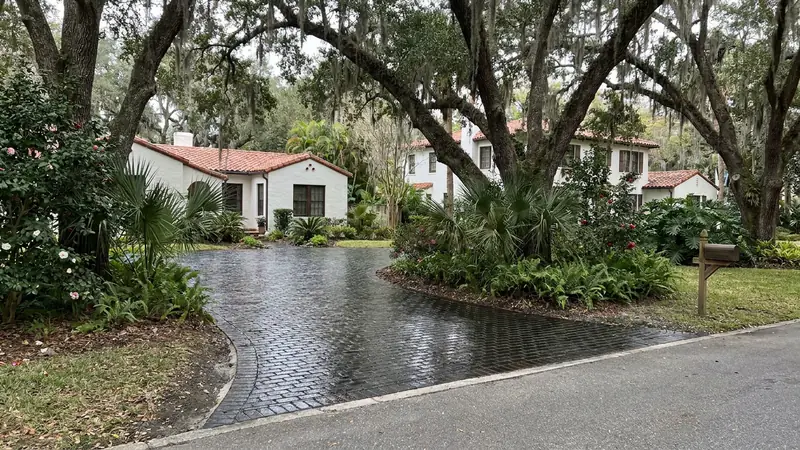
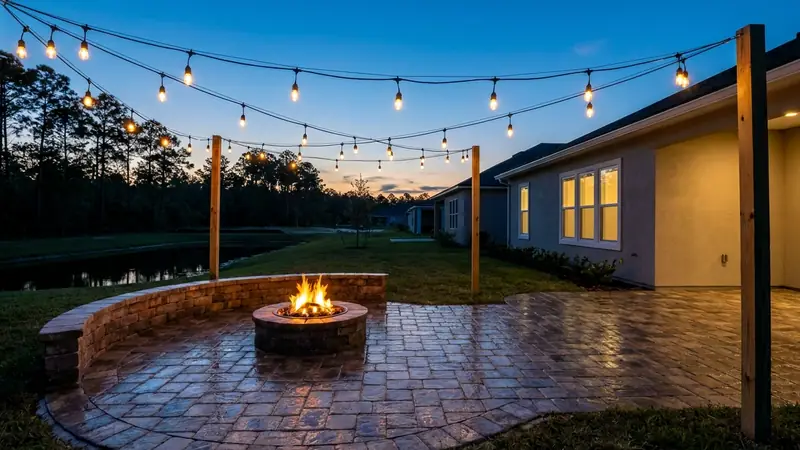
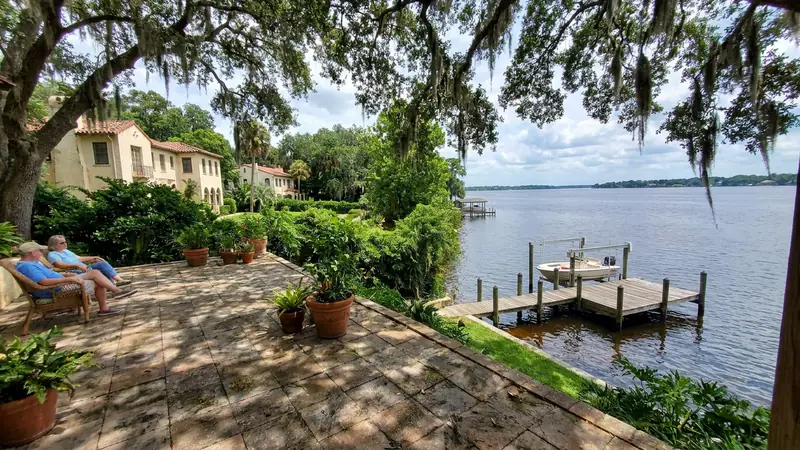
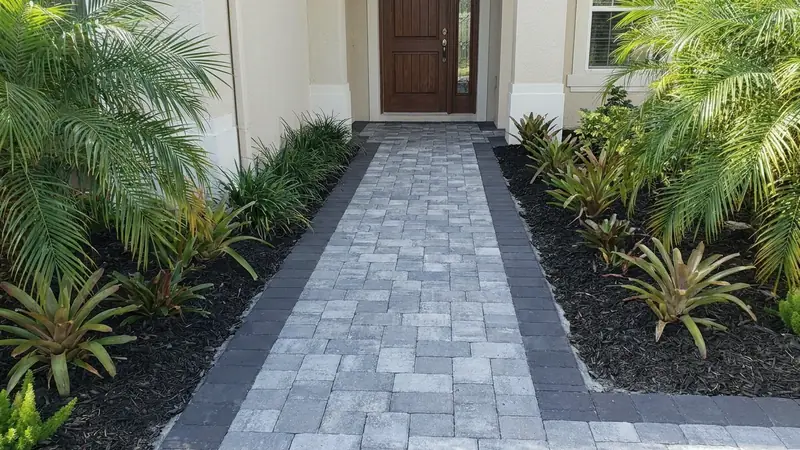
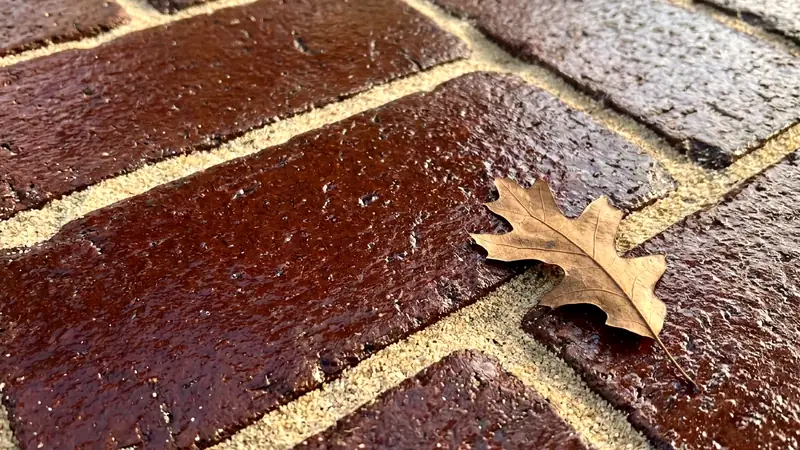
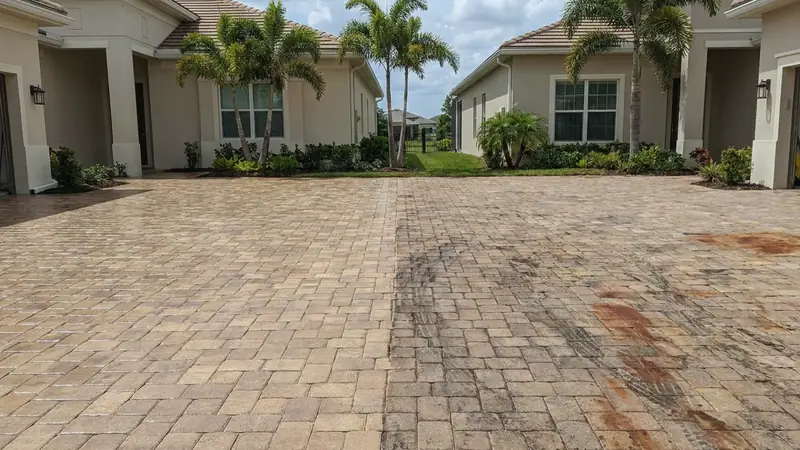
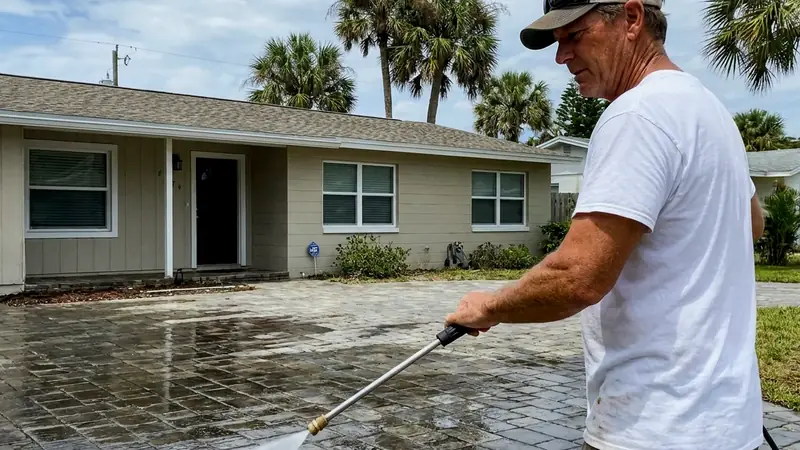
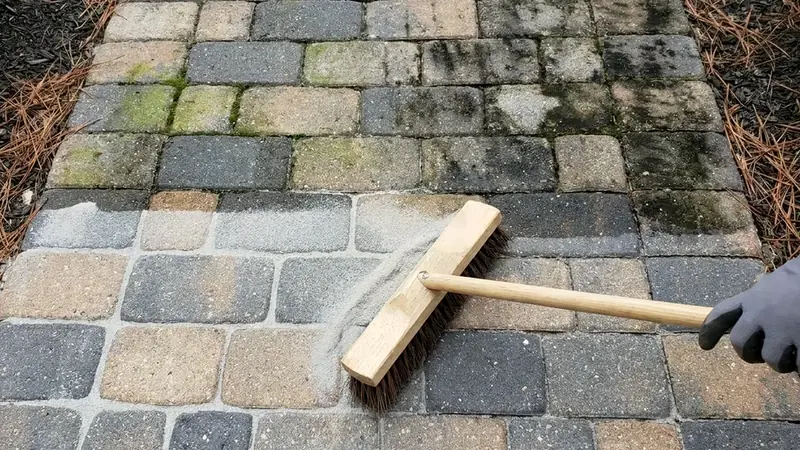
What do restored pavers look like around Ortega?
Frequently Asked Questions
What is the average cost to seal pavers in Florida?
Northeast Florida companies publish $1.75 to $3.25 per square foot to clean, sand and seal, and one starts sealing at $1.90. Restoration costs more when old sealer has to be stripped, which one local calculator puts 20 to 30 percent above a standard seal.
How often should you reseal pavers in Florida?
Two to five years, depending on who you ask. A Northeast Florida washing company calls two to three years typical and says sun, pool chlorine and summer storms can pull that toward two. Open driveways wear faster than shaded paths.
Is there a downside to sealing pavers?
Yes. The job repeats every few years, a film can feel slick beside a pool, and sealer put over dirt or damp pavers fails. Sealing also cannot raise a sunken paver, which is why restoration starts with repairs.
How much should I pay for paver sealing?
That depends on size, condition and prep. The published range is $1.75 to $3.25 per square foot for a clean, sand and seal. A small 400 square foot patio lands near $700 to $1,300 on that range, and stripping failed sealer lifts it.
How much do people charge to seal pavers?
Published Northeast Florida numbers run from $0.22 per square foot to clean and $1.90 to start sealing, up to $3.25 for the full clean, sand and seal. Restoration jobs sit toward the upper end because they include more steps.
Is it good to seal pavers in Florida?
Usually, once the pavers are clean, level and full of sand. A coat helps hold sand against summer storms and keeps weeds and ants out of the joints, according to Landscape Ontario. It does not repair a damaged base.
Why is paver sealing so expensive?
Preparation takes most of the time. Washing, new sand, drying and stripping old sealer all come before the coat, and a Northeast Florida company says empty joints or failed sealer make it a two-day restoration instead of a same-day spray.
When is restoring pavers better than replacing them?
A Northeast Florida paver company says full replacement is only needed when more than 40 to 50 percent of the paver field is compromised or the base has failed across the whole area. Smaller trouble spots are lifted, rebuilt and relaid.
Why are my Ortega pavers sinking near the oaks?
Roots and water. A Northeast Florida paver company says oak roots can run 10 to 20 feet from the trunk and lift pavers, and that rain carries away the base underneath. Restoration removes the roots that affect the pavers and rebuilds the base.
Do I need approval to restore pavers at an Old Ortega home?
Possibly. The city requires a Certificate of Appropriateness for some site work, such as driveways, at local historic districts and landmarks. Look up the address on the Land Development Map and ask whether resetting existing pavers counts.
Want worn pavers made right again in Ortega?
Phone or send the short form, and a contractor who restores pavers answers in 1 business day, usually much sooner.
Free, no obligation